


Understand Your Child's Results
Use this page to understand your child's Multitudes screening result, percentile score, and the reading skills measured.
Your child's report may look like one of these examples:
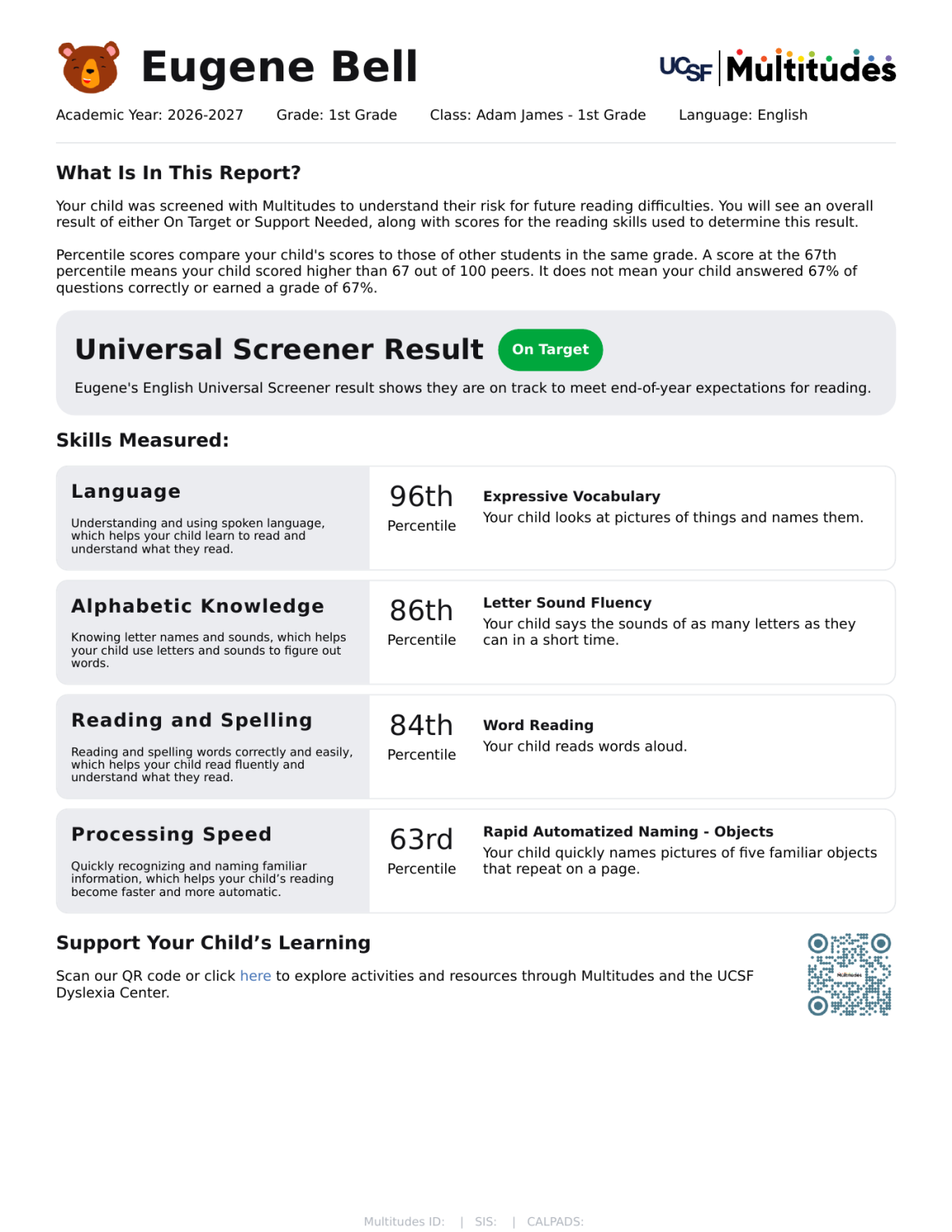
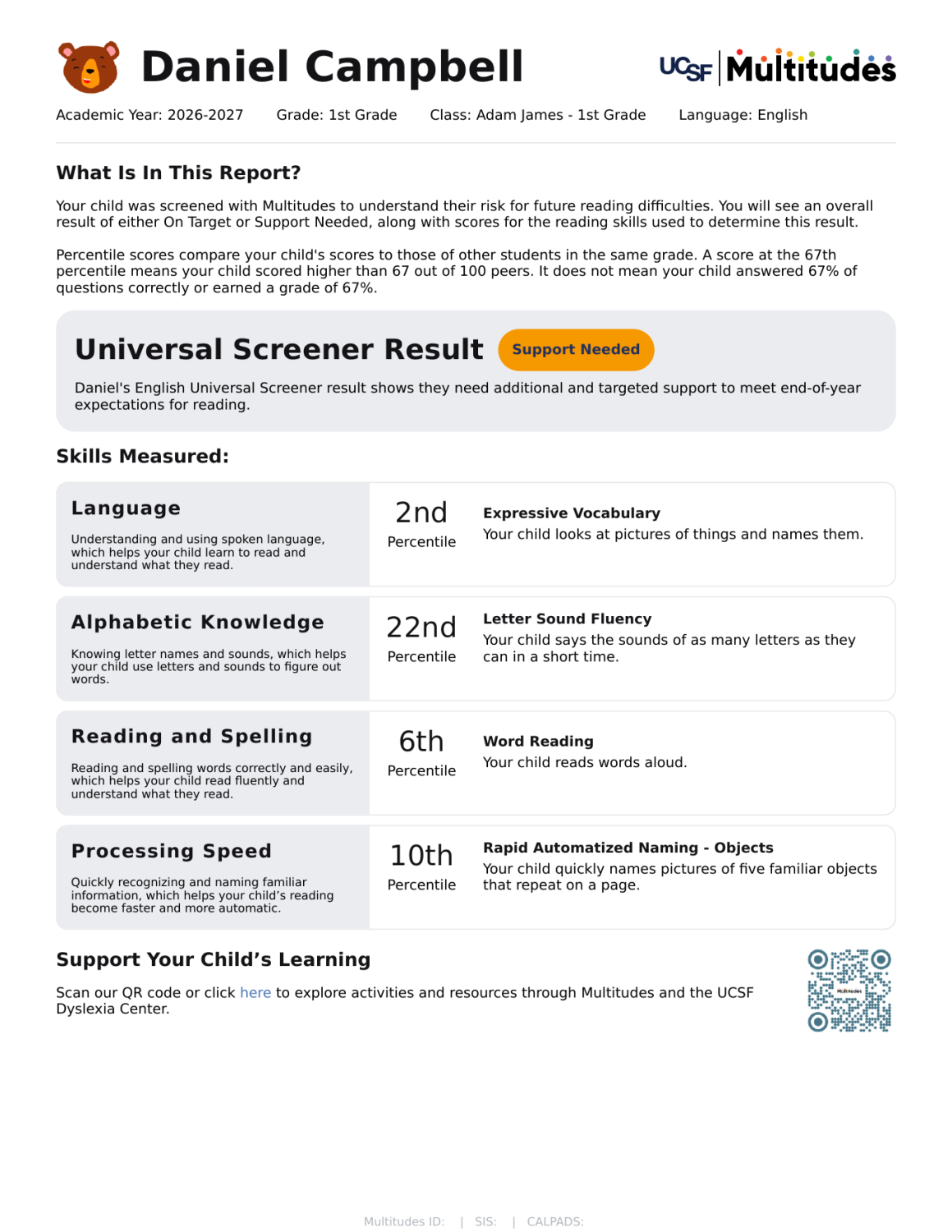
A screening result is not a diagnosis or a label.
It is one piece of information that helps your child's teacher understand how their reading skills are developing and whether some skills may need additional attention. Teachers consider screening results along with classroom learning and other information.
What does my child's screening result mean?
Your child's report will show one of the following screening results.
On Target
Your child's reading skills are developing as expected at this point in the school year. Their teacher will continue teaching these skills to ensure their growth.
Support Needed
Your child's screening results suggest that some reading skills may need additional attention. This does not diagnose a reading disability. Your child's teacher will consider these results along with other information to determine what instruction or support may be helpful.
Incomplete
Incomplete means your child did not finish all parts of the screening. Your child's school or teacher can let you know whether any additional screening is needed.
What does Multitudes measure?
Multitudes looks at several skills that are important as children learn to read. Your child's report may include information about the following areas.
Explore More
Learn what happens after screening, find ways to support your child's language and literacy development, or learn more about Multitudes.
After Screening
Learn what happens after a child is screened, how schools use screening information, and how support can change as children learn and grow.
Supporting Your Child
Discover simple activities that encourage language, reading, and literacy development through everyday routines.
About Multitudes
Learn what Multitudes is, why schools use reading screening, and what your child experiences during the screening.